THE MATHS
A solved draw
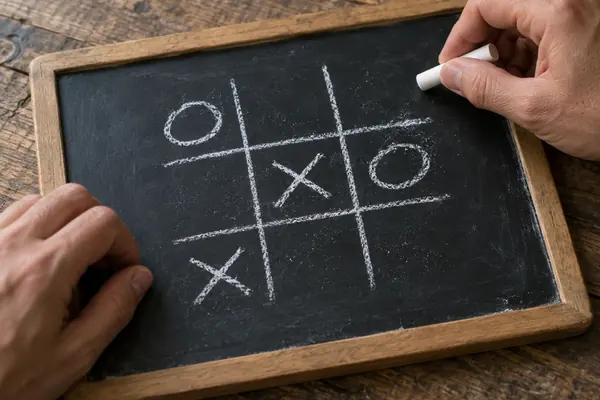
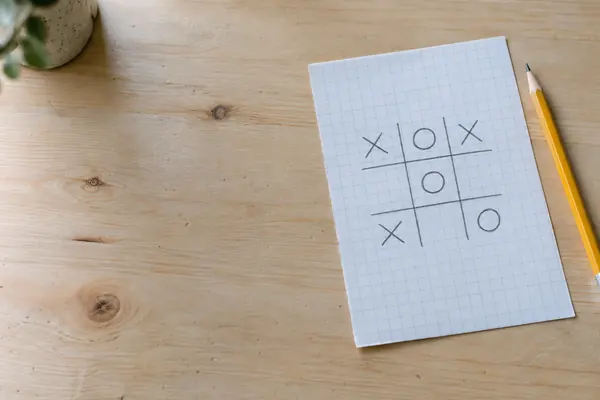
With best play from both sides neither player can force a win, so the game is a theoretical draw. Mathematicians call it a solved game.
See the numbers doodletictactoe
THE MATHS OF A PLAYGROUND GAME
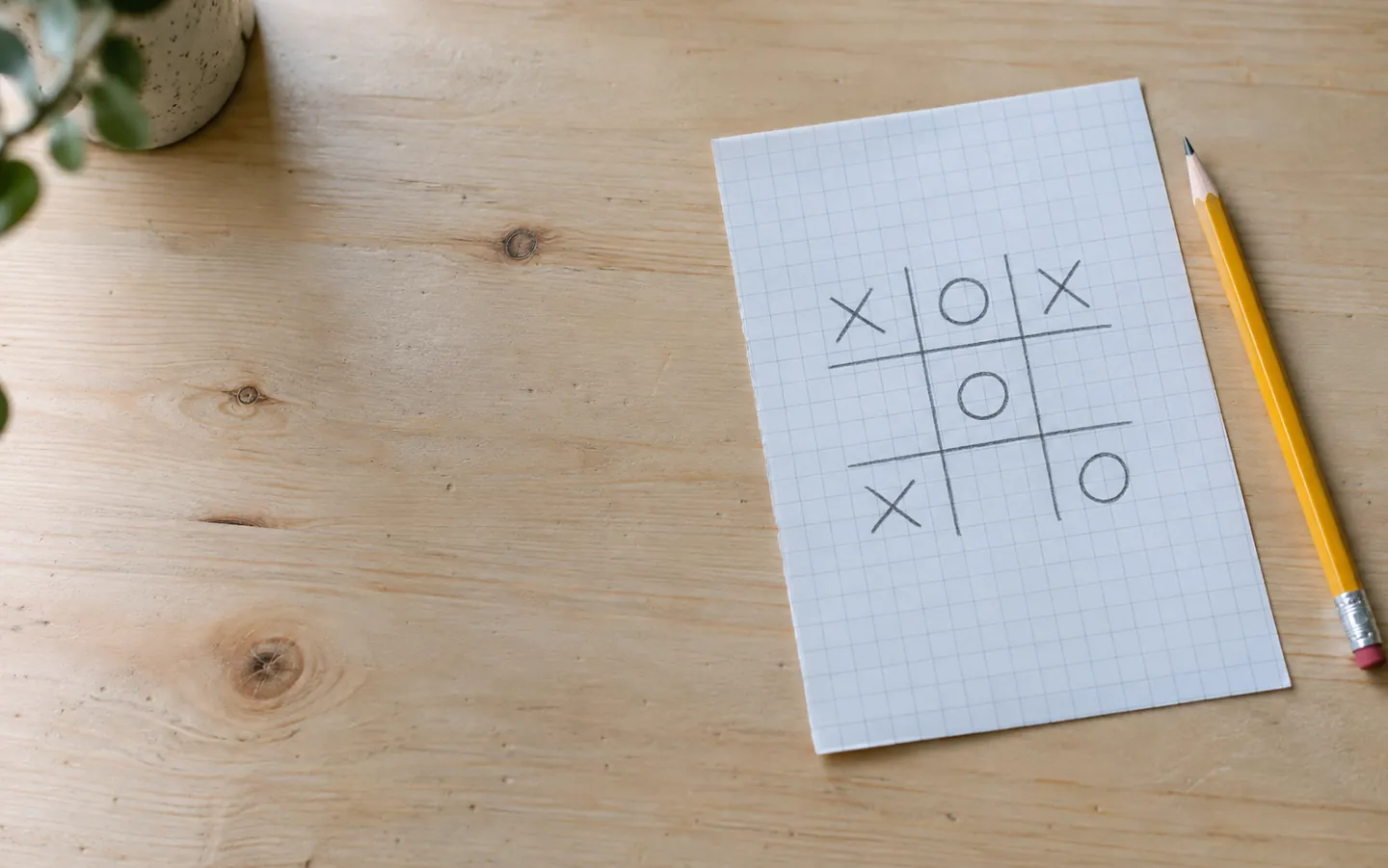
Play noughts and crosses perfectly and it always ends in a draw.
The game has been fully worked out by mathematicians. There are 255,168 ways a game can unfold, a short list of rules that never loses, and a Cambridge computer that played it back in 1952.
DRAW with perfect play
Pick your next moveTHE SHORT ANSWER
Nine squares and eight winning lines.
Every possible game has been counted.
THE MATHS
With best play from both sides neither player can force a win, so the game is a theoretical draw. Mathematicians call it a solved game.
See the numbersSTRATEGY
A 1972 priority list by Newell and Simon tells you what to do each turn: win, block, fork, block a fork, then centre and corners.
Try the rulesHISTORY
In 1952 a Cambridge PhD candidate wrote OXO, noughts and crosses for the EDSAC computer, with moves picked on a telephone dial.
Meet OXO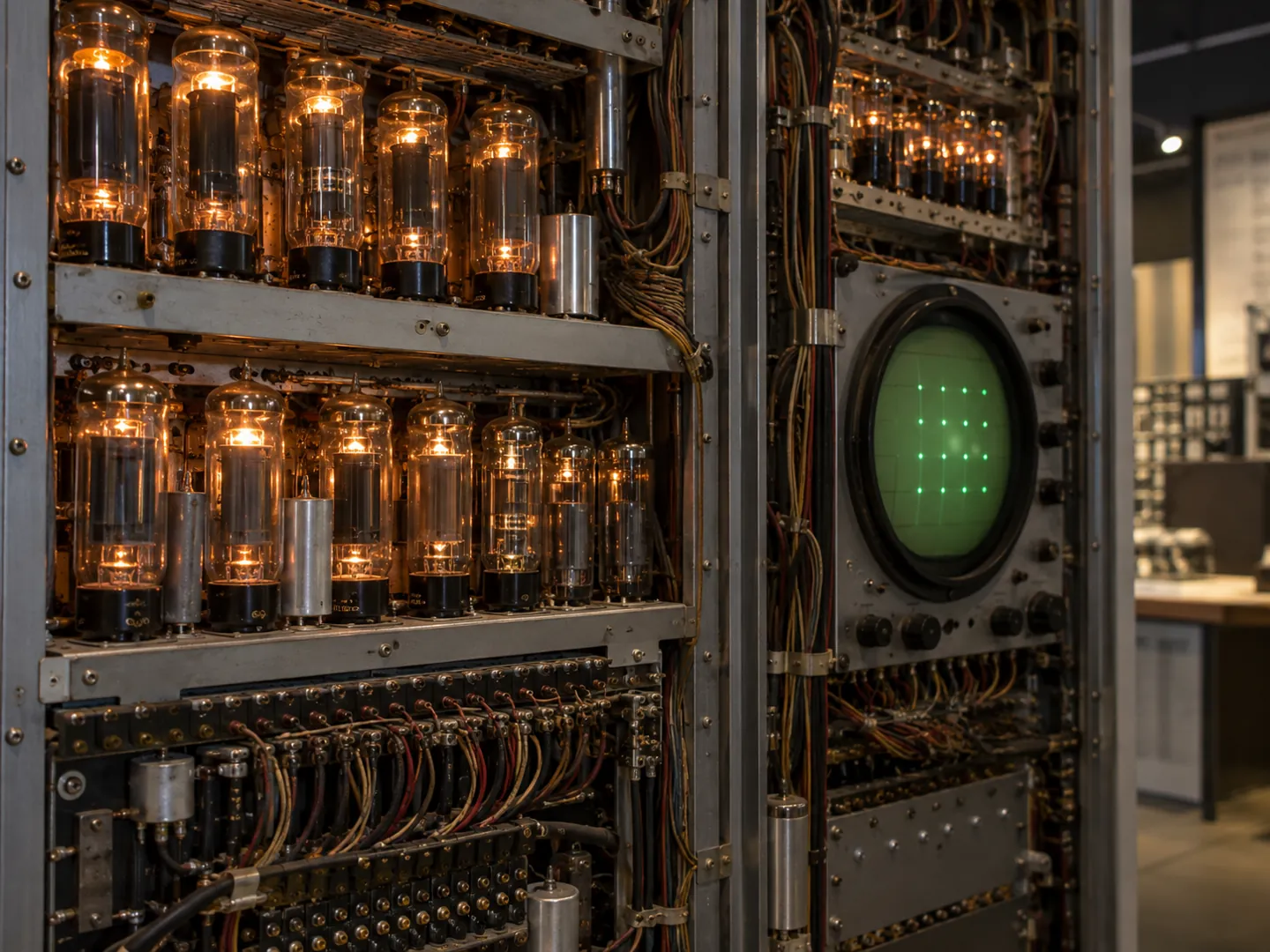
FOUR HABITS TO TRY
You cannot force a win against someone who plays perfectly, but you can make sure you never lose, and pounce when they slip.
Before anything else, check every line for two of your marks and an empty square.
If they have two in a line, block it straight away. A missed block is the usual way games are lost.
Aim for a move that makes two lines of two at once. Your opponent can only stop one of them.
X can win or force a draw from a corner, edge or centre start. A corner leaves the opponent the fewest safe replies.
TWO NUMBERS WORTH KNOWING
One figure counts every possible game,
one counts the different ways it can end.
255,168
Possible games of noughts and crosses
Counting every order of moves, without merging mirror images, there are 255,168 games. Of these, 131,184 are won by the first player, 77,904 by the second and 46,080 are draws.
EVERY GAME · GAME TREE
138 endings
Different finished boards
Treat rotations and reflections as the same and there are 138 finished boards: 91 won by X, 44 won by O and only 3 drawn.
ENDINGS · UP TO SYMMETRY
The first player wins far more of the random-play games, yet with perfect play from both sides the result is always a draw. A second player cannot have a winning strategy, because an extra mark on the board can never hurt the first player.
WHAT SHOULD I DO NOW?
Perfect play follows a strict order of priorities. Choose what you see on the board to find the move, and how high it sits on the list.
Based on the Newell and Simon (1972) strategy as summarised in the Wikipedia article on tic-tac-toe.
OXO, 1952
Alexander Douglas was a PhD candidate at the University of Cambridge when he wrote OXO for the EDSAC computer. It showed the board on a cathode-ray tube driven as a 35 by 16 dot grid, and players chose a square with a mechanical telephone dial.
The player decided who went first by dialling 0 or 1. It was made to support his dissertation on human-computer interaction, and few people outside Cambridge ever played it.
Questions
No. If both players play perfectly, neither can force a win and the game ends in a draw. You can only win if your opponent makes a mistake.
Counting every order of moves, there are 255,168 possible games. If you treat rotations and reflections as the same, there are 26,830 games and 765 essentially different positions.
X can win or force a draw from any opening. A corner leaves the opponent the fewest replies that avoid losing; one study cited on Wikipedia suggests the centre may be best against imperfect players.
They behave differently. On a 3×3×3 cube the first player can force a win, in as few as four moves, starting in the central cube. The 4×4×4 game Qubic was proved a first-player win in 1980 using over 1,500 hours of computer time.
Three-in-a-row boards have been traced to roofing tiles from around 1300 BC in ancient Egypt, and a Roman version called terni lapilli was played around the first century BC.
Updated
ABOUT THIS NAME
doodletictactoe.com is part of the DoodleSale portfolio. It isn't in an auction right now, but you can ask about leasing it.